Population screening explained
This guide sets out what population screening is, how it works, and its limitations.
Screening is the process of identifying apparently healthy people who may have an increased chance of a disease or condition.
The screening provider then offers information, further tests and treatment. This is to reduce associated problems or complications.
Screening should always be a personal choice.
Illustration of the screening process
It can be helpful to think of screening like a sieve. In this diagram, a large group of people accept the offer of a screening test.
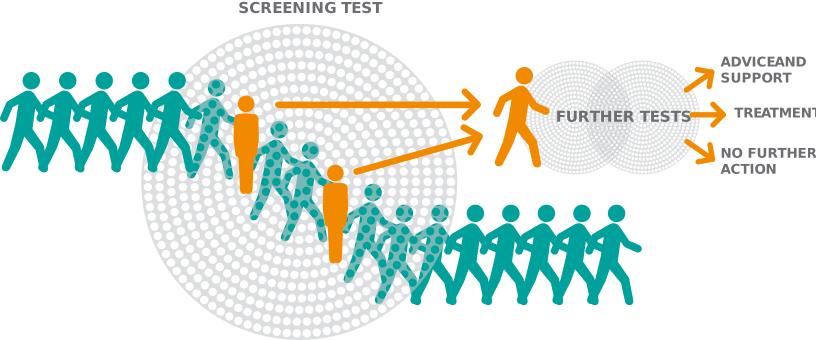
The sieve represents the screening test and most people pass through it. This means they have a low chance of having the condition screened for.
The people left in the sieve have a higher chance of having the condition. A further investigation is then offered to them.
Identification through this process can show that they have the condition screened for. The person may need further confirmatory diagnostic tests.
At each stage of the screening process, people can make their own choices about further:
-
tests
-
treatment
-
advice
-
support
Ethics of population screening
Because apparently healthy people are invited for screening, healthcare professionals have to ensure individuals receive:
-
guidance to help make informed choices
-
support throughout the screening process
Screening expectations
It is important to have realistic expectations of what a screening programme does.
Screening can:
-
save lives or improve quality of life through early identification of a condition
-
reduce the chance of developing a serious condition or its complications
-
give pregnant women informed reproductive choice
Screening does not guarantee protection. Receiving a low chance result does not prevent the person from developing the condition at a later date.
In any screening programme there are false positive and false negative results.
False positive: someone with a positive screening result who does not have the target condition.
False negative: someone with a negative screening result who does have the target condition.
Information for people invited for screening
All screening programmes should support personal informed choice and produce screening information with this aim in mind. See UK National Screening Committee (UK NSC) guidance on informed choice.
Screening videos
These videos explain more about population screening:
The basics of screening
Lifetime screening pathways
Female lifetime screening pathway
Male lifetime screening pathway
Screening offered to pregnant women and newborn babies
screening offered to pregnant women and newborn babies
Printable screening information resource
A printable information resource is available that summarises the work of the population screening programmes in England.
The double-sided A4 resource includes:
-
a timeline of all national screening programmes available in the English NHS
-
an explanation and visual representation of population screening
-
definition of personal choice
-
signposting to more resources
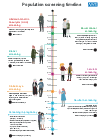
Screening providers can print off copies to raise awareness of screening among the public and other health professionals.
Other resources
A short ‘introduction to population screening’ e-learning module is available. This explains what screening is, using animations, videos and quizzes. It is open to everyone and does not require registration.
View the introduction to population screening e-learning module.
Find out more about education and training resources for screening.
Last updated 24 November 2023 + show all updates
-
Updated national screening timeline.
-
First published.